Strength training for beginners: a simple 3-day full-body plan
A safe, beginner-friendly full-body routine you can do at home or in the gym three times a week, with sets, reps, rest times and how to progress.
By the Fitlyn editorial team · Published · 3 min read
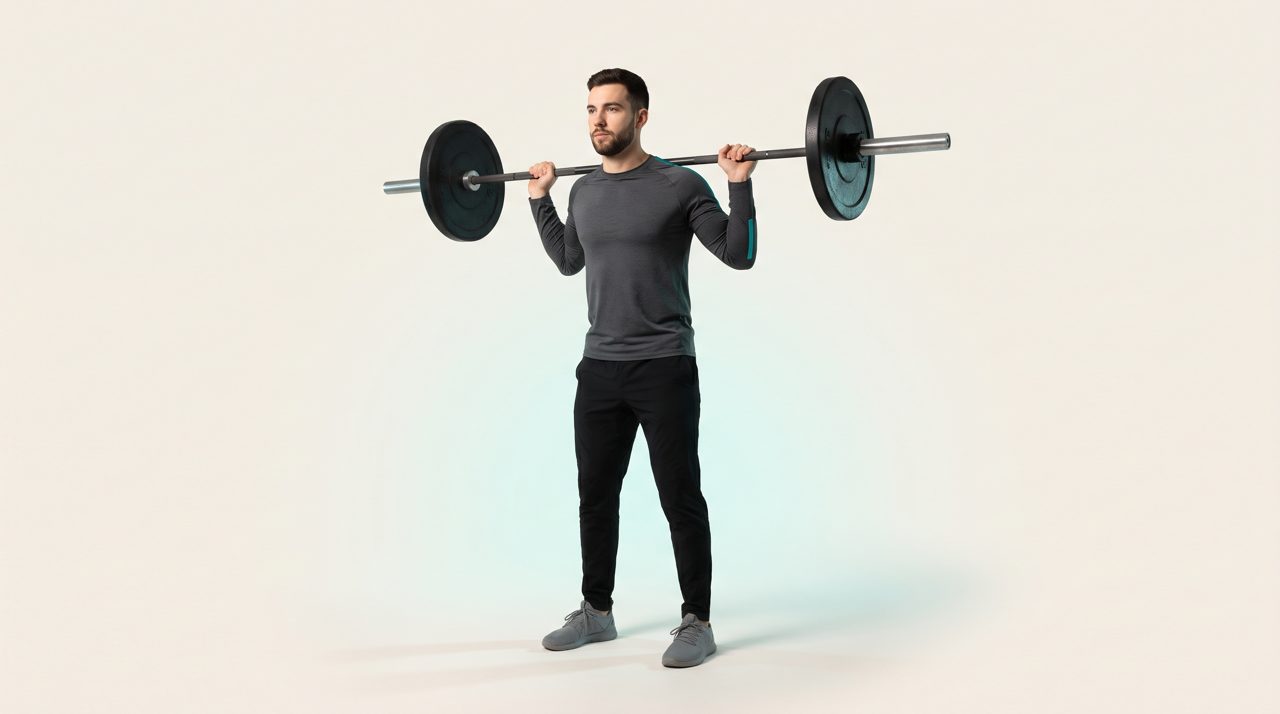
Strength training is not only for bodybuilders. It helps you keep muscle while losing fat, supports your bones and joints, improves blood sugar control and makes everyday tasks easier. The World Health Organization recommends muscle-strengthening activities on two or more days a week for adults.
How the plan works
You train your whole body three times a week on non-consecutive days, for example Saturday, Monday and Wednesday. Each session takes about 40 to 50 minutes.
- Sets and reps: 2 to 3 sets of 8 to 12 repetitions.
- Effort: stop each set when you could still do about 2 more good repetitions.
- Rest: 60 to 120 seconds between sets.
- Form first: use a weight you can control through the full movement.
Warm up for 5 to 10 minutes
Start with brisk walking, cycling or marching in place, then do a lighter set of the first exercises in each session.
The workouts
Alternate between workout A and workout B: A, B, A one week, then B, A, B the next.
Workout A
| Exercise | Home option | Sets × reps |
|---|---|---|
| Squat | Bodyweight or goblet squat with a backpack | 3 × 8–12 |
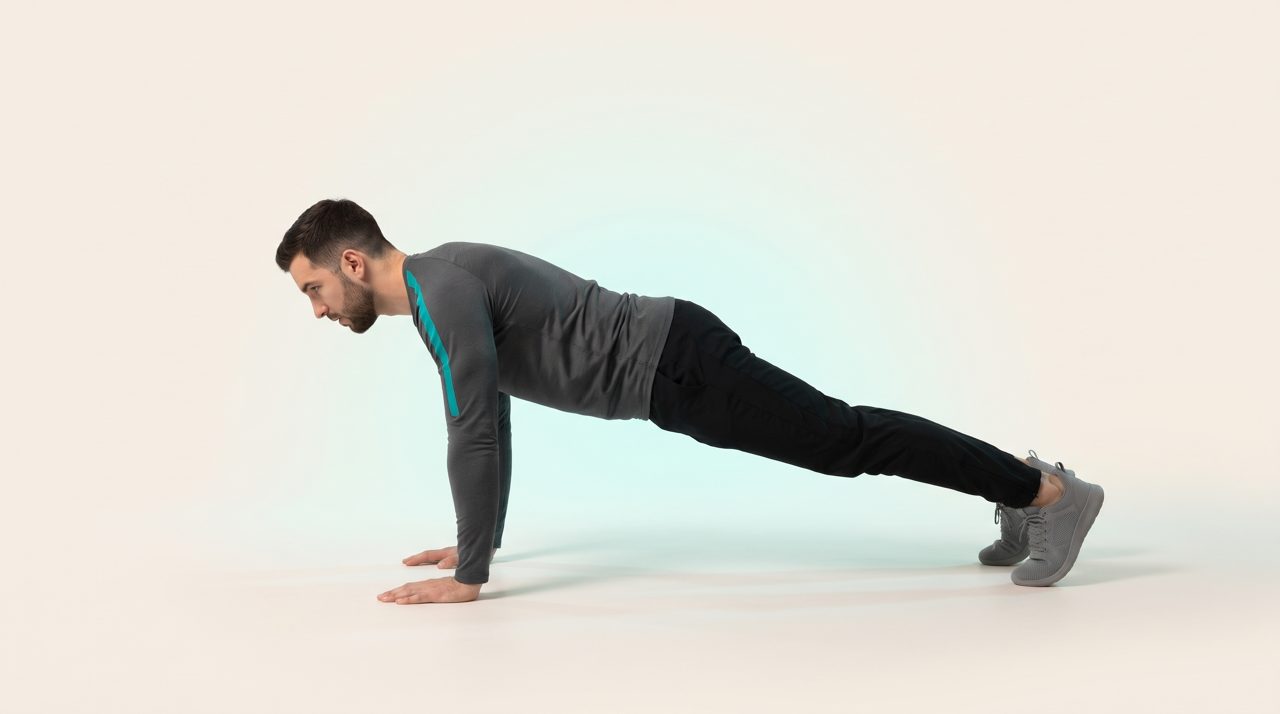
| Push-up | On a table or wall if the floor is too hard | 3 × 6–12 |
| Row | One-arm row with a water bottle or dumbbell | 3 × 8–12 each side |
| Hip hinge | Romanian deadlift with dumbbells or a backpack | 3 × 8–12 |
| Plank | On knees if needed | 3 × 20–40 seconds |
Workout B
| Exercise | Home option | Sets × reps |
|---|---|---|
| Lunge or split squat | Hold a chair for balance | 3 × 8–10 each leg |
| Overhead press | Dumbbells or filled bottles | 3 × 8–12 |
| Lat pulldown or band pulldown | Resistance band over a door | 3 × 10–12 |
| Hip thrust or glute bridge | Bodyweight, then add weight | 3 × 10–15 |
| Side plank | On knees if needed | 2 × 20–30 seconds each side |
Technique cues that matter
- Squat: feet about shoulder-width, chest up, knees track over your toes, go as deep as you can while keeping your back neutral.
- Push-up: hands under your shoulders, body in one straight line, lower your chest towards the floor with control.
- Hip hinge: push your hips back, keep the weight close to your legs and your back flat; you should feel it in your hamstrings.
- Lunge: take a long enough step that your front knee stays roughly above your foot, and lower your back knee straight down.
How to progress
This is the most important part. When you can do the top of the rep range (for example 12 reps) for all sets with good form, make it a little harder next time:
- Add a small amount of weight, or
- Use a harder variation (for example, from a table push-up to a floor push-up), or
- Slow down the lowering phase to about three seconds.
Write down what you do each session. Progress you can see is the best motivation.
Soreness versus pain
Muscle soreness one or two days after a new workout is normal and fades as you adapt. Sharp pain, pain in a joint, or pain that gets worse during an exercise is a signal to stop that movement. If you have a heart condition, high blood pressure that is not controlled, a recent injury or surgery, or you are pregnant, check with a doctor before starting.
How Fitlyn helps
Fitlyn's exercise library has guides for key moves in this plan, such as the squat, push-up, lunge, deadlift and hip thrust, with step-by-step cues, common mistakes and the muscles they work. You can log your sets, reps and weights, and the rest timer tells you when to start the next set.
Sources
- World Health Organization. Physical activity fact sheet.
- American College of Sports Medicine. Progression models in resistance training for healthy adults. Medicine & Science in Sports & Exercise, 2009.
- Westcott WL. Resistance training is medicine: effects of strength training on health. Current Sports Medicine Reports, 2012.